
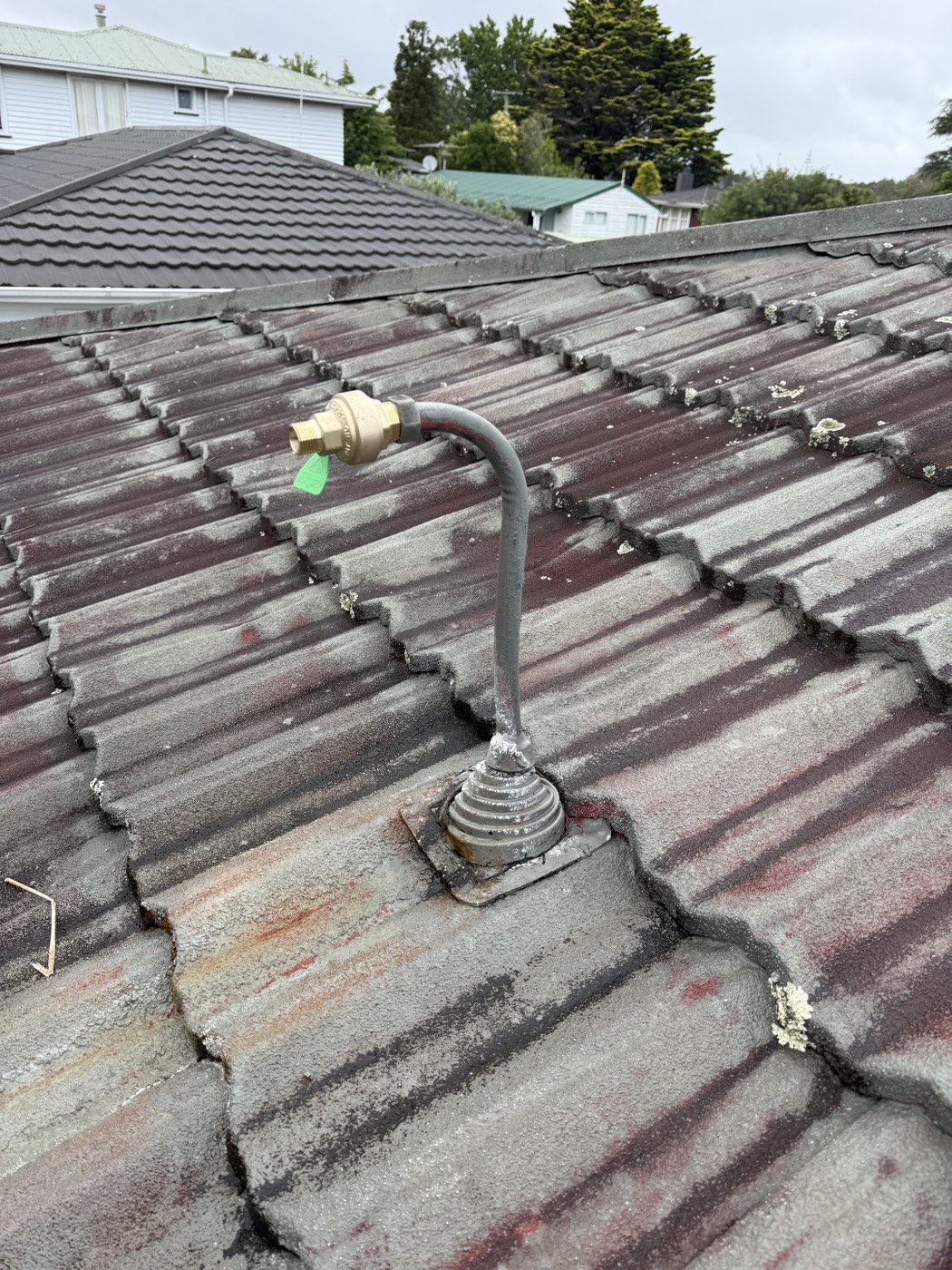
If you have an older hot water cylinder, there is usually a pipe that runs up through the roof and sticks out above the tiles or iron. Most people never think about it. When water starts pouring out of it, that is your cylinder telling you something has gone wrong.
We went to a house in Mount Wellington recently where the owner said it sounded like a waterfall in the ceiling. It had started suddenly. The other thing they had noticed was their power bill, which had jumped and they could not work out why.
Both things had the same cause. The cylinder was pushing hot water out through that roof pipe. Every time it lost hot water, cold water came in to replace it, so the cylinder kept heating all day and all night. They were paying to heat water that was going straight outside.
What is that pipe for?
Water expands when it heats up, so an older low pressure cylinder needs somewhere for that extra bit of water to go. That is what the roof pipe does. It is called a vent, and on an open vented system it is the highest point in the whole thing.
A small dribble now and then, especially while the water is heating, is normal. Water running steadily is not. When it runs constantly, it usually means the valves that control the water going into the cylinder have failed, and the cylinder is simply pushing water out the top instead.
Why did my power bill go up?
This is the part that catches people out, because the two do not seem connected.
Your cylinder keeps a tank of water hot. If that hot water is escaping out the roof pipe, cold water flows in to replace it, and the heater switches on again to warm it up. That repeats over and over, and the heater ends up running far more than it normally would.
At the Mount Wellington house the heater and the temperature control were both fine. Nothing was wrong with them. They were just working non stop to heat water that was leaving the house.
If your bill has gone up and nothing else in your household has changed, this is worth ruling out. It is one of the few faults that shows up on a bill before you notice anything else.
What can I check myself?
You do not need to get on the roof, and we would rather you did not.
From outside, look up at that pipe and see if water is running down the roof away from it, or if there is a wet mark or staining below it. From inside, stand under the ceiling and listen. If a cylinder is spilling water you can usually hear it running, and it does not stop when you stop using taps.
Then check a few simple things. Is the hot water still hot? Is anything damp in the cupboard around the cylinder, or is the ceiling below it marked? Has your power use gone up for no reason you can point to?
If water is running non stop, you can switch the cylinder off at the switchboard while you wait for a plumber. That stops you paying to heat water that is going outside. Leave the pipes and valves alone.
Were the taps part of it?
Partly, and it is worth knowing about because it comes up a lot in older Auckland houses.
Not every hot water system runs at the same pressure, and the taps have to suit the system they are connected to. At this house someone before us had fitted taps that did not match the cylinder, and that was adding to the problem every time a tap was used.
We replaced the failed valves on the cylinder, sorted out the tap side so it suited the system, and checked the temperature setting while we were there. It took two visits, and the cylinder itself did not need replacing.
What if my cylinder is mains pressure?
Then you do not have a vent pipe, but you do have a relief valve, and it can produce the same symptom for a different reason.
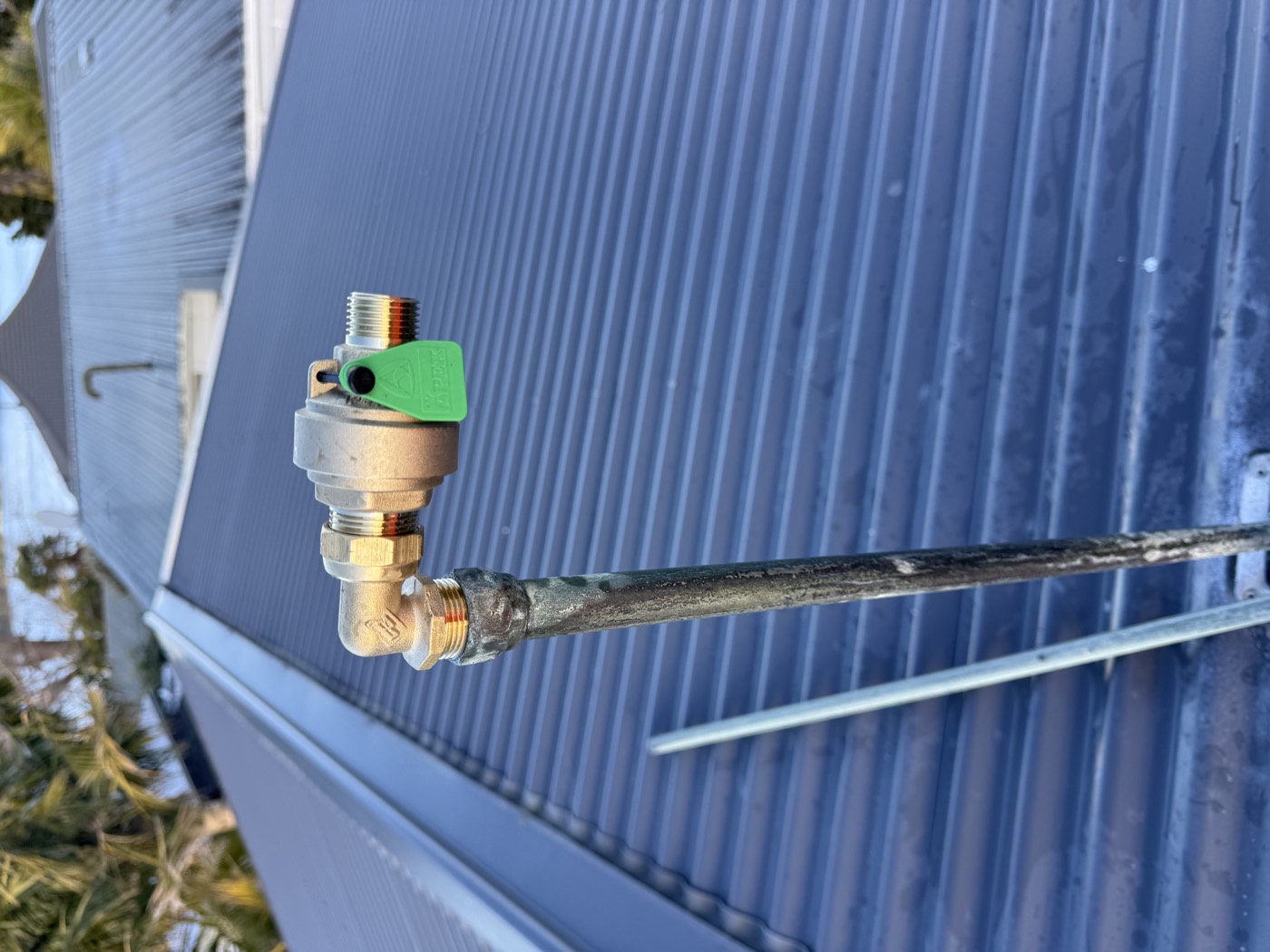
A mains pressure cylinder is a sealed system. Instead of venting expansion out the top, it has a temperature and pressure relief valve that opens when either goes past its rating, and the water leaves down a discharge line. That line often runs out through a wall or up to an outlet on the roof, so you still end up with water appearing outside.
The same rule applies: a little discharge as the water heats is normal, a steady run is a fault. What is different is the likely cause.
We attended a property in Mount Wellington where the cylinder was discharging water via the relief line to the roof outlet. The fault was not in the cylinder. We replaced the pressure reducing valve and the relief valve as a matched pair, because on these systems the two work together and renewing one without the other tends to bring you straight back. While we were there we changed the aerators on the mains pressure fixtures to suit the system, and found the thermostat set at 65 degrees, which we brought down.
That last part matters for diagnosis. When a mains pressure cylinder discharges steadily, the usual culprits are:
- The relief valve itself has failed and no longer seats.
- Incoming water pressure is too high for the valve’s rating, so it opens every day and eventually stops sealing at all. This is why it is often worse overnight, when network pressure peaks.
- The temperature is set too high, so the pressure inside rises further with every heating cycle.
Two of those three are not cylinder faults at all. They are pressure and setting problems, and fixing the cylinder without fixing them just buys you a few months.
Repair or replace?
Not every cylinder that spills water is finished, and that is the main thing to take away.
The valves that control it are a normal replaceable part. When they fail, they get swapped out and the cylinder carries on as before. Age and condition are what decide whether the cylinder itself needs replacing. If it is very old, rusty, or actually leaking rather than spilling out the roof pipe, then a new one starts to make more sense. A plumber can tell you which situation you are in once they have had a look.
Who do I call?
Any certifying plumber can sort this, and it is worth doing sooner rather than later. The water going out the roof does not usually damage anything, but the power cost builds up quickly, and a failed valve will not come right on its own.
If you rent, tell your property manager as soon as you hear it, and mention the power bill too. That is usually what makes people move quickly.
Common questions
Is a bit of water from the roof pipe normal?
A small amount now and then is normal. Water expands as it heats, and that pipe gives it somewhere to go, so a drip or a short trickle while the water is heating up is nothing to worry about. What is not normal is water running steadily, or running when nobody has used hot water for hours. If you can hear it constantly, treat it as a fault.
How do I know if my cylinder is the type this happens to?
The pipe through the roof is the giveaway. Older low pressure, open vented cylinders work this way and have one. Newer mains pressure cylinders do not, and they let water out through a small pipe out a wall instead, usually much lower down. Another hint is the water flow, since older systems deliver hot water more gently than cold. If you are not sure, a plumber will know as soon as they look at it.
Can I just switch it off and leave it?
Switching it off at the switchboard is a sensible short term step, because it stops the heating and stops the cost. Water may still come out of the roof pipe, since that is coming from the water supply rather than from the heating. It buys you time, it does not fix anything, and you will not have hot water while it is off, so it is not something to leave for long.
Should I turn the temperature down to save power?
Not below 60 degrees. Water sitting in a cylinder has to stay hot enough to stop bacteria growing in it, so that setting is there for health reasons rather than comfort. The temperature that comes out of your bathroom taps and shower is controlled separately, so that you do not get scalded. If yours seems set oddly, get a plumber to check it rather than adjusting it yourself.
My bill went up but I cannot hear anything. What else could it be?
A cylinder spilling water is one cause, but not the only one. A hot water leak under the floor or in a wall does the same thing quietly. So does a heater or temperature control that has failed and left the cylinder heating non stop. A dripping hot tap or a toilet that keeps running will also add up over a month. If your usage has jumped with no explanation, get someone to look before the next bill arrives.
Related reading
- Water under the hot water cylinder: four things it could be
- Water pressure in Auckland homes, and why it is highest at night
- Hot water cylinder Q&A: the eight questions we get most
- Repair or replace? How we decide
- Hot water cylinder replacement: what actually happens
- How to find and fix a water leak in your house
Hearing water running in the ceiling, or a power bill that does not add up? Call Nexus Plumbing or email [email protected].